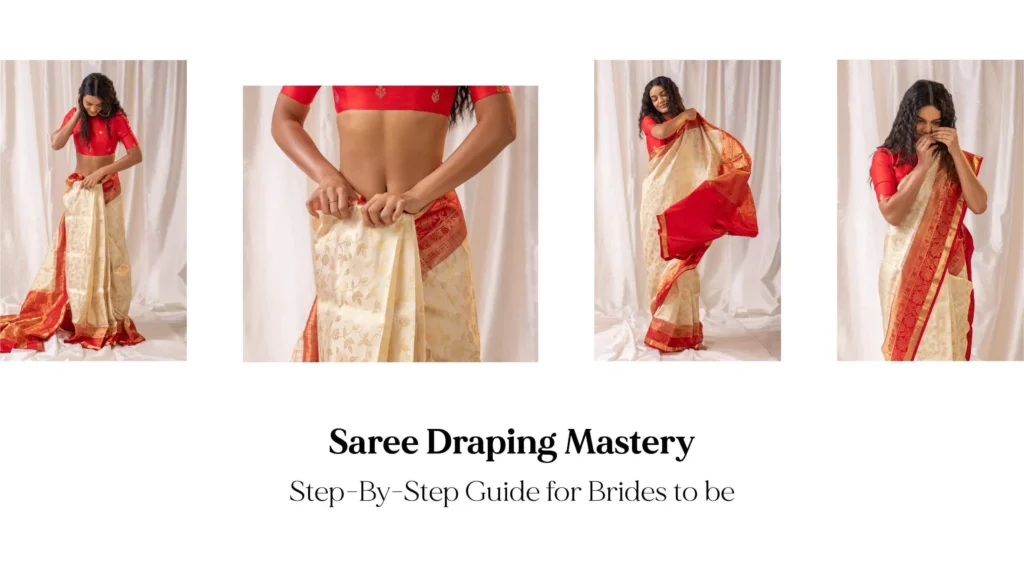
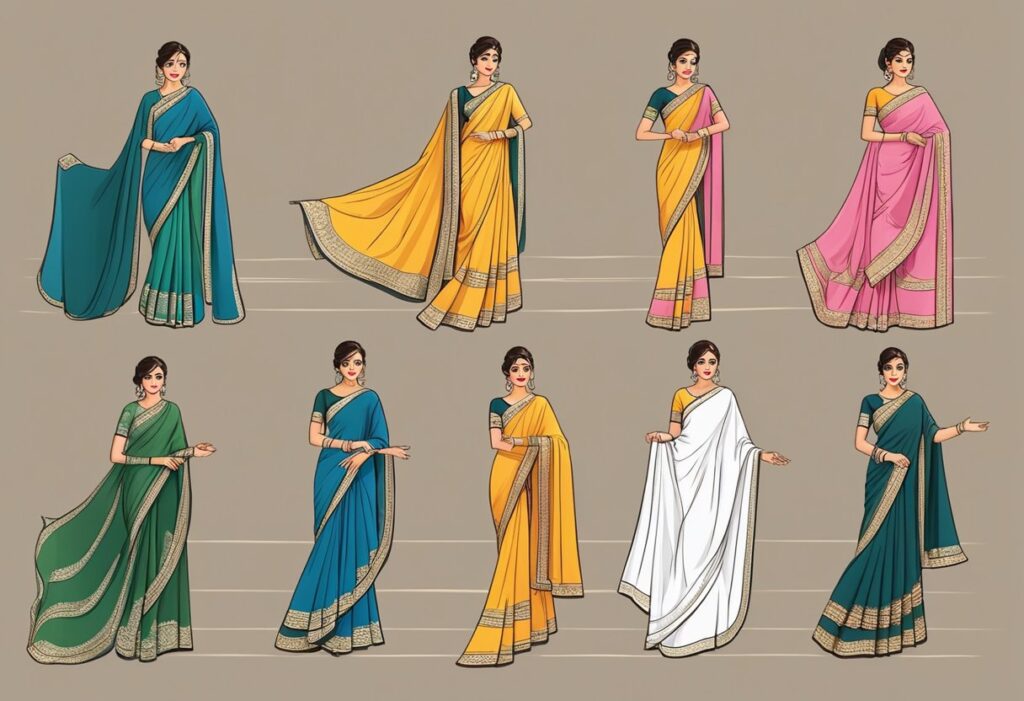
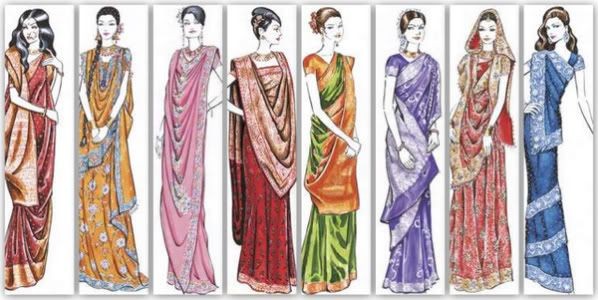
Saree draping is the art of wearing a saree in a way that looks graceful, neat, and comfortable. It is not just about wrapping the fabric, but about arranging the pleats, pallu, and folds so the saree enhances the body shape and matches the occasion. A well-draped saree allows easy movement while maintaining elegance and balance. Different draping styles can change the overall look—from traditional and royal to modern and stylish. Proper pinning, clean pleats, and correct length are important so the saree stays in place all day and looks polished, especially during weddings and special events.
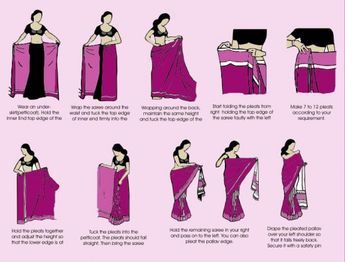
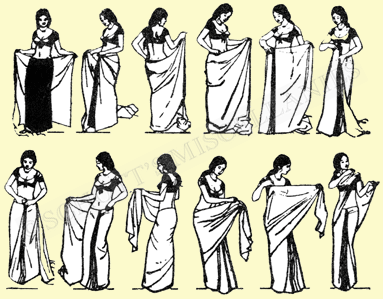
Saree draping should always start with wearing the right petticoat and blouse so the saree sits properly and feels comfortable. The saree is first tucked neatly around the waist to create a smooth base, making sure the length just touches the floor. Pleats are then made carefully and evenly, because clean pleats give the saree a graceful and polished look. These pleats are tucked securely in the center so they stay in place while walking or sitting. The pallu is arranged next, either left loose, pleated, or pinned on the shoulder, depending on the style and occasion. Pins are used wisely to secure the saree without damaging the fabric. Throughout the process, the saree should feel balanced—not too tight or too loose—so the person can move easily. A well-draped saree looks elegant, feels comfortable, and stays perfect for long hours.
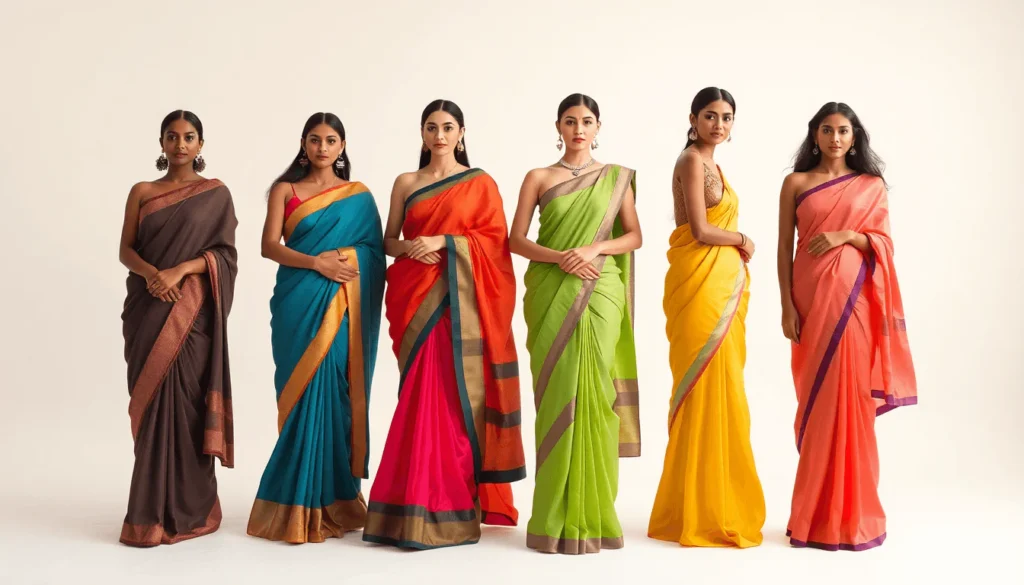
Saree draping is special because it is not just wearing an outfit, it is creating grace, confidence, and tradition in one look. Each pleat, fold, and drape is done with care so the saree highlights the wearer’s personality and body shape. It allows one single piece of fabric to look different every time, depending on how it is styled. Saree draping is special because it blends culture with beauty, comfort with elegance, and tradition with modern style, making the wearer feel unique and confident on any special occasion.
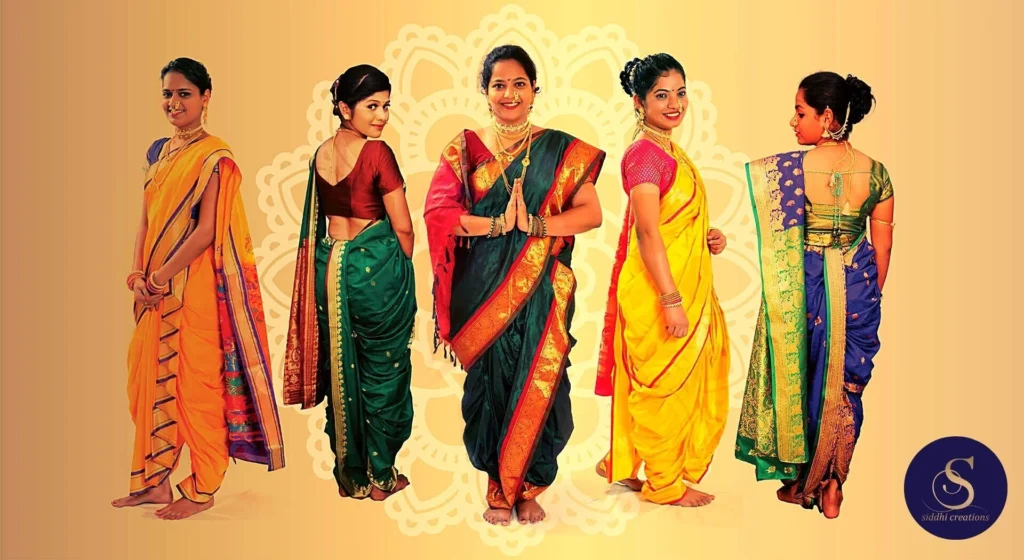
Cultural sarees represent the tradition, history, and identity of different regions of India. Each cultural saree is special because of its fabric, weaving style, colors, and the way it is worn, all of which are passed down through generations. These sarees are often worn during festivals, weddings, and rituals, making them deeply connected to emotions and customs. From rich silk sarees worn in South India to handwoven cotton and silk sarees from Bengal, Gujarat, and Maharashtra, every cultural saree tells a story of the land and the people who created it. Wearing a cultural saree is not just about fashion, but about honoring heritage and celebrating tradition.